
Structured trading signal ideas delivered in real time via Telegram
Trading Discipline & Market Timing
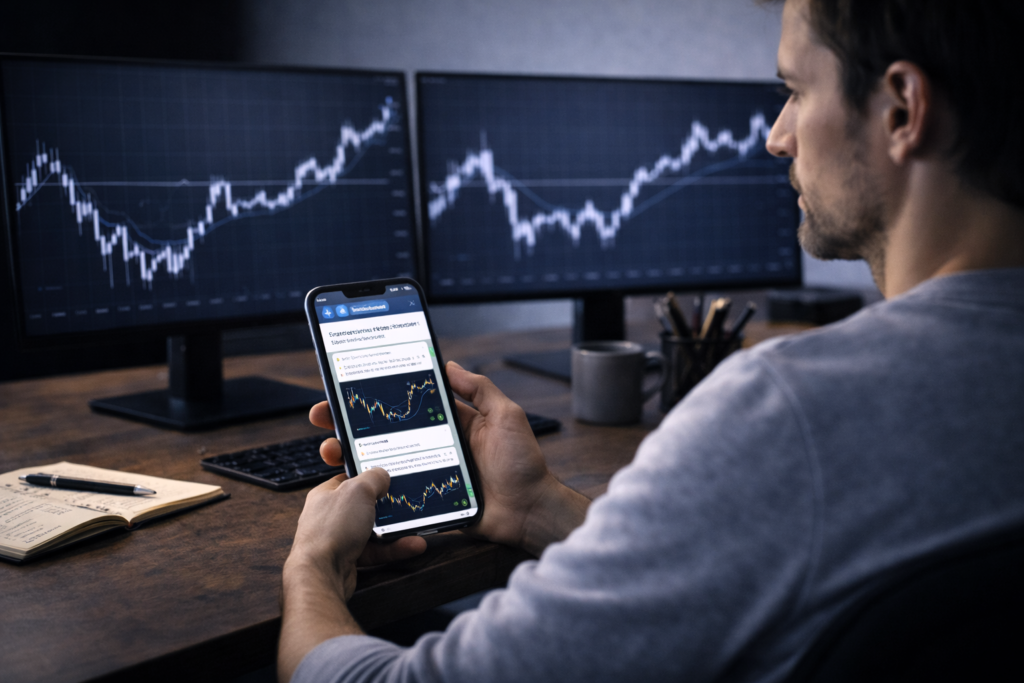
+ A trader calmly observing charts without placing a trade
+ Why patience protects capital better than constant action
+ Trading education focused on restraint, not activity
Most traders associate progress with action.
Placing trades. Being involved. Doing something.
In reality, one of the most valuable trading skills is the ability to wait. This article explains why waiting is not passive, why it feels uncomfortable, and how disciplined inactivity often separates consistent traders from frustrated ones.
Markets reward timing, not activity
Markets are not opportunities every minute.
Most price movement is noise. Most sessions offer no clear edge.
Waiting means allowing conditions to align before committing risk. It is an active decision, not hesitation. Traders who trade less often but with better timing often protect capital more effectively than those who trade constantly.
Why waiting feels uncomfortable
Waiting creates uncertainty.
No position means no immediate feedback. Many traders confuse this discomfort with missed opportunity.
This often leads to:
– Forcing trades
– Lowering standards
– Entering without confirmation
Waiting challenges the desire to feel productive.
Discipline feels quiet.
Impulsiveness feels active.
Waiting filters emotional decisions
When traders wait for predefined conditions, emotions lose influence.
There is less urgency.
Less fear of missing out.
Less pressure to be right.
Waiting removes impulse from execution.
Why fewer trades often improve results
More trades do not mean better performance.
Each trade introduces risk, emotion, and execution pressure. Reducing trade frequency allows traders to focus on quality rather than quantity.
Waiting naturally filters low-quality setups.
Waiting builds trust in structure
When traders wait and see conditions play out repeatedly, confidence grows.
Not from winning trades, but from following process.
Trust develops when:
– Rules are respected
– Risk is preserved
– Outcomes are accepted
Waiting reinforces structure.
Final thoughts
Waiting is not a lack of skill.
It is often the highest expression of it.
Markets will always move.
Opportunities will always return.
Capital lost through impatience rarely does.